

Crucial Warning: If your travel goal is a relaxing afternoon on white sand complete with easy access, beach umbrellas, and a cold Bintang served by a beach cafe, Batu Siha Beach is not your destination.
This is a story of a real expedition. It’s an adventure that tests your physical limits, requires a grueling 4-to-5-hour round-trip trek, and pushes you to the brink of exhaustion under the relentless Nusa Penida sun. Batu Siha is one of the island’s few truly hidden beaches. For travelers seeking raw, unadulterated adventure and the bragging rights of visiting an untouched location, this is the most honest and detailed guide you will find.
Why Batu Siha Remains Nusa Penida’s Best-Kept Secret


To understand Batu Siha, we must first look at the state of Nusa Penida tourism. Places like Kelingking and Diamond Beach now host thousands of visitors daily. However, Batu Siha has, until very recently, maintained its status as an unmapped, undiscussed destination both online and offline.
Based on the initial discoveries and documentation of this site, as recently as 2019, virtually no reliable information about the trek or the location existed on the internet. It was unknown even to many local drivers on the island. This lack of initial information meant that the first credible source to publish a comprehensive guide would instantly become the definitive authority for anyone searching for the location.
We present this guide using detailed, verifiable facts gathered from the experience of early visitors, confirming the beach’s difficulty and obscurity. This guarantees you are receiving the most credible and authoritative information available.
The Reality Check: Detailing the True 5-Hour Trek
While other articles may vaguely mention a “difficult hike,” we provide a necessary reality check. The experience of reaching Batu Siha is defined by the commitment required for its challenging terrain.
1. Time Allocation and Physical Demands
You must allocate a minimum of 4 to 5 hours for the entire round trip from the parking area to the beach and back.
- The Route: Starts from a dead-end access road and descends steeply toward the coastline.
- The Terrain: The path is an unmarked trail traversing a dry river wash and involves scrambling down steep, loose cliff sections.
- The Grind: The ascent back up is the most exhausting part, demanding significant physical effort, especially when done during the midday heat.
2. Mandatory Gear Checklist (Non-Negotiable)
Mistaking this trek for the standardized, paved steps of more popular beaches is a critical error.
- Footwear: Sturdy hiking boots or robust trail shoes are absolutely mandatory. Casual sandals or loose flip-flops are dangerous due to the slippery, rocky, and steep nature of the path.
- Water Supply (Critical): Bring a minimum of 3 liters of water per person. We cannot stress this enough. The combination of prolonged heat and extreme physical exertion means running out of water on the return ascent is a dangerous possibility. There are zero facilities or water sources along the trail.
- Essentials: Sunscreen, a hat, and a basic first-aid kit are strongly recommended for minor cuts and scrapes.
3. Trail Hazards and Navigation Tips
The path is not maintained, adding to the feeling of a genuine expedition.
- Getting Lost: The trail is often faint, particularly where it follows the dry river wash. It is easy to lose your way. A key navigation tip is to follow the natural creek line, which is often marked by a dotted line on Google Maps.
- Wildlife: Early visitors encountered Bali snakes in the bush and severe ant infestations along certain sections of the trail. Be aware of your surroundings.
Expert Recommendation: Due to the severe physical demands, it is essential to start the trek before 9:00 AM. Avoid starting in the afternoon; getting lost and attempting the ascent in the dark is extremely hazardous.
The Untouched Reward: What Awaits at the Coastline
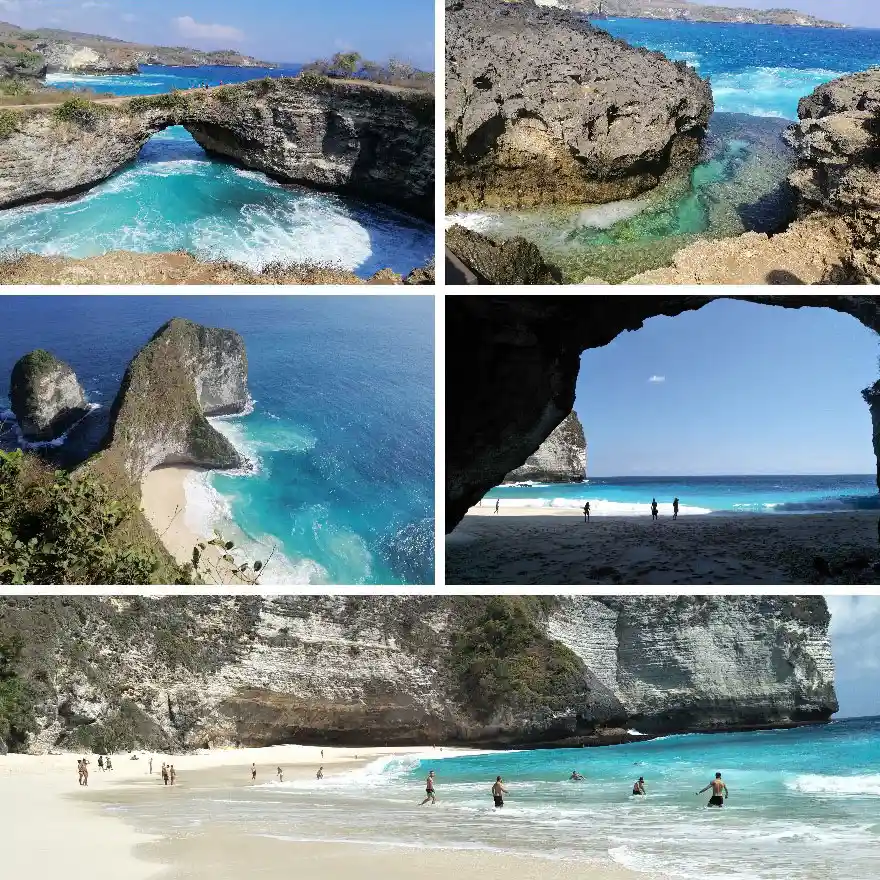
Once you complete the arduous descent, you are rewarded with a view as dramatic as Diamond Beach, but experienced in near-total isolation.
1. The Cliffs, Rocks, and Sand
- Towering Cliffs: The beach is dramatically framed by massive white limestone cliffs.
- Diamond Rock Formation: Large, pointy boulders rise from the shore, including one that strongly resembles the iconic diamond-shaped rock at Diamond Beach.
- Tide Dependent: The amount of visible white sand is highly dependent on the tide. During high tide, the beach may be reduced to only a narrow strip. Plan your visit for low tide to maximize exploration time.
2. History and Hidden Features
Along the way, the only signs of human presence are historic:
- Old Temples: The trail passes several old, partially ruined Hindu pagodas and temples, including one damaged by the 2018 earthquake, suggesting the area has historical and ceremonial significance to the locals.
- The Hidden Pool: Some adventurous explorers have reported a natural freshwater pool tucked away in the rocks nearby, a truly unique feature for a seaside location. Finding this requires additional, careful exploration.
Practical Visitor Information
To ensure we provide the most complete and trustworthy guide, here are the essential logistics:
| Category | Detail |
| Location | Southwest side of Nusa Penida, near Batukandik Village. |
| Driving Time | Approximately 1 hour from the main northern docks/accommodation areas. |
| Road Condition | Rough and narrow. Best accessed by motorbike, but proceed with extreme caution and speed control. |
| Entrance Fee | FREE (As of the latest reports). There is no ticket counter, no parking fee, and no official staff. |
| Swimming | Not Recommended. Strong undercurrents, sharp rocks, and the sheer remoteness mean swimming here is dangerous and unsupported. |
Batu Siha Beach is more than a location; it’s a conquest. It demands thorough preparation, physical endurance, and a respect for nature’s raw power. The reward is a profound sense of accomplishment and an unspoiled vista that few others will ever witness.
Are you ready to commit to the expedition and earn the silence of Batu Siha Beach?